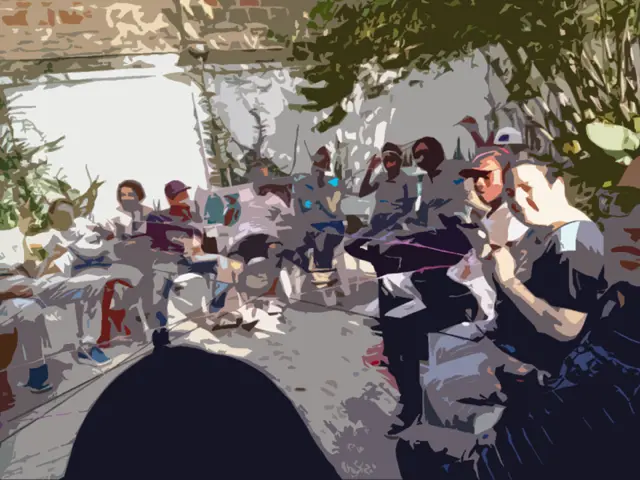
I have spent the last year working in Colombia on a very innovative project to rehabilitate ex-young offenders and re-integrate them back into their community. It is based in the city of Cali and is a project organized by the City Mayor’s office. It is based entirely on restorative principles. I was hired by the British Council to provide the restorative philosophy, practice and toolkit to support everyone working on the project.
This was a complex project looking at every area that needed to be approached restoratively; similar to restorative schools incorporating restorative methodology within all their strategies, processes and procedures - particularly when dealing with situations that infringe the agreed Codes of Conduct.

In my final visit I was told a story by David, one of the key workers, that exemplified many of the restorative principles that they had been building.
The population that we are working with are very complex and have very complex needs. There are 50 young people on the pilot programme and many have been incarcerated for very serious crimes, including homicide. Sentencing for homicide for under 18’s in Colombia is very different to adults and as a result gangs often recruit under-18s for this purpose. There is also no programme of Youth Offending Services or Probation to support these young people on their release. It is also important to note that young people are not put in ‘prison’ but instead incarcerated in institutions which are managed by educators.
The story David told me was an example of everything that we are trying to create when we create a restorative culture.
The five restorative principles that we teach are:
What are the restorative questions?
Old-school methods follow this approach:
If something goes wrong then we traditionally ask; What happened?
I can be anywhere in the world and if I ask what question is usually asked next… I will always get the same answer ... Why? and Who’s fault is it? This approach naturally leads to looking at how these individuals can then be punished or reprimanded, leading to a shame/blame culture.
In restorative practice, after looking at ‘What happened?’ we focus on the IMPACT and then we look at how we can move on and what needs to happen to make things better. It is not about punishment but it is about consequences. This very simple approach leads to very different consequences and results as the following conversation exemplifies.
David, one of the key workers, explained that, in his first week of working with the young people, he had been sent some anonymous abusive and threatening texts by one of the cohort. He chose to deal with this situation by holding a restorative circle the next day. David sat the whole group down and explained what he had been sent and the room froze. Instead of finger-wagging, David explained the impact on him and how it had been difficult for him to receive these messages and how he had felt and then he said “I think I’ve got off on the wrong foot with one or two of you” so he asked the group how he could build relationship with them. He went around the circle asking for their thoughts and feelings. After about 15 people have spoken, one guy says, “it was me. I sent those messages and I’m sorry.” He apologised to David and said that he had been in a bad space but that did not justify his actions. Then the circle continued. They agreed ways of working together more harmoniously.
I thought that is the perfect example of the benefits of a non-shaming, restorative approach because if David had sat down and said ‘Who did this?” they would have all denied it. But instead, a member of the group took accountability/responsibility and showed remorse. And they agreed a better way of working together. It was a really big deal for the young man to own up to this in a large group and feel no shame or embarrassment in doing so. Many of the young people are in rival gangs so David had created an environment of trust and safety, through a restorative circle, where the young man felt able to speak up.
I was profoundly moved by this example of trusting the restorative process to create a harmonious way of working.
More News
The Charlotte Calkin One: The power and joy of restorative work
Charlotte Calkin discusses the power and joy of restorative work in this in-depth conversation with GameShift, exploring her experience as one of the UK's leading practitioners in restorative justice and restorative practice.
Restorative Justice: Beyond Boundaries with Charlotte Calkin
Charlotte Calkin delves into the transformative potential of restorative tools across diverse sectors and international landscapes, sharing her experience facilitating over 300 restorative justice conferences and circles.
Hurt Less Live More Podcast - Episode 13
Charlotte Calkin joins Dr Mark Goulston and JJ Stenhouse to discuss the power of restorative justice and how her work can heal hurts perpetrated in all walks of life.